How to Build a Wedding Photography Timeline That Gives You Room to Enjoy the Day
A photography timeline works best when it reflects the actual day: who needs to be where, how long moving takes, and which moments matter most to you.
Larson Pro Photography | Published October 11, 2026
Begin with the times that are already fixed
Your ceremony time is a useful anchor for the photography schedule. Add venue access, when everyone must be ready, dinner service and any fixed reception events. Include the time a ceremony space needs to be clear before guests enter. These details define the real openings for portraits and coverage.
Write down locations beside the times. Getting ready at a hotel, marrying at another location and celebrating at a third creates a different schedule from staying at one venue. Share the draft with your photographer and coordinator early, while there is still room to adjust the order.
Choose a few photography priorities together
Agree on what deserves protected time. You may want relaxed couple portraits, photographs with extended family, coverage of getting ready, or time on the dance floor. Your priorities help the photographer recommend where coverage begins and ends, and what can fit comfortably.
Separate moments that happen naturally from photographs that need people gathered in one place. The ceremony needs coverage as it unfolds. A large family photograph needs a location, available relatives and someone who can help find them. Giving those needs distinct places in the schedule makes the plan easier to follow.
Decide whether to see each other before the ceremony
A first look can create an opening for some couple and wedding party portraits before guests arrive. If you prefer to see each other at the ceremony, plan those portraits afterward. Either choice can work; it changes when you need to be ready and how much portrait time is needed between ceremony and reception.
Discuss the decision with your photographer before setting cocktail hour expectations. Consider daylight, privacy and whether family members can arrive early. You can also keep the first look private and do family groups later. Build the schedule around the experience you want, then make the portrait plan fit.
Give family photographs a clear list and a helper
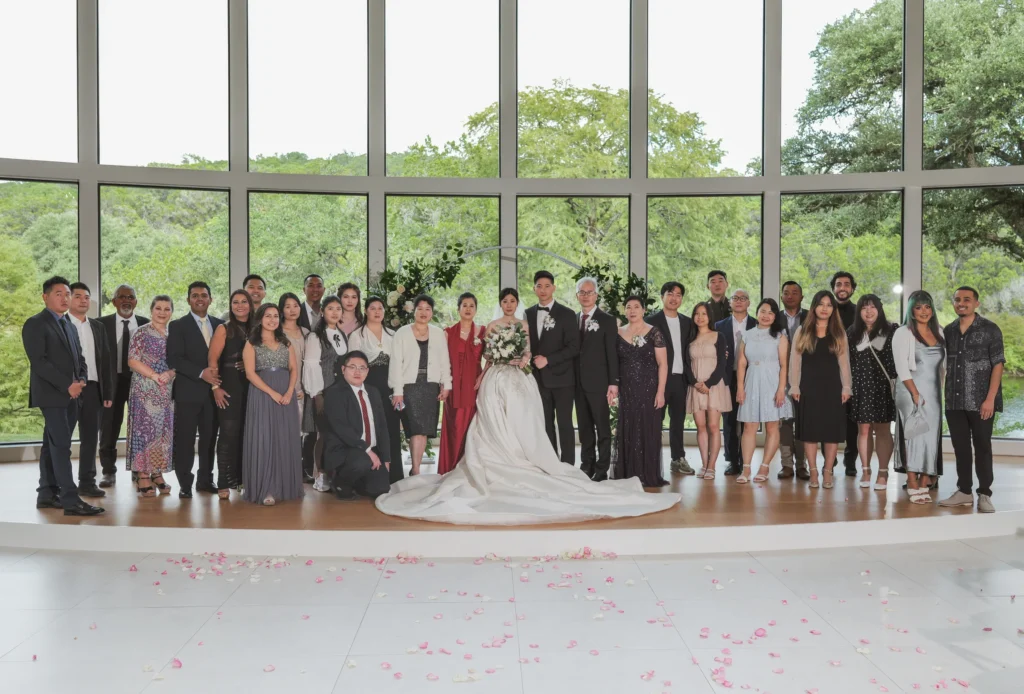
Write the family combinations you want using names. A specific list is easier to follow than a request for every possible group. Start with the relationships most important to you, then ask the photographer how the list affects timing. Share any family circumstances privately so the grouping process can be respectful.
Choose a helper who recognizes the relatives and can gather the next group. Tell everyone on the list where to meet and whether they should stay after the ceremony. Account for anyone who needs seating, shade or an accessible route. Keep the gathering location close enough that people do not spend the portrait block searching for it.
Count transitions as part of the schedule
A map’s drive time is only one part of a location change. People also need to collect belongings, walk to vehicles, park and reach the next room. Portrait locations within one venue may still require a walk or elevator trip. Include those movements instead of scheduling the next activity at the exact arrival time.
For a San Antonio or Hill Country wedding, check access and parking with your venue and transport provider. Ask about gates, loading areas and any scheduled events that could affect access. Add a cushion between major activities so a small delay does not immediately consume the couple portrait time.
Match portrait timing to the light and the setting
Share the look you like with your photographer: bright outdoor images, soft evening portraits or dramatic photographs after dark. The useful portrait time depends on your date, location, available shade and the way buildings or trees affect the light. A sunset time alone does not describe the light at your chosen spot.
Ask whether a short second portrait opportunity would fit during the reception. It can provide a different look without requiring one long absence. Also identify a weather backup with workable light and enough room. Confirm who will make the change and how the wedding party will hear about it.
Coordinate photography, film and reception events
If you are booking video, share the same timeline with both services. Vows, speeches and planned entrances may require coordination with the officiant, DJ or sound provider. Review the wedding film options when deciding which spoken moments you want covered.
Confirm that the important reception events fall within the agreed coverage window. A late exit or surprise performance should be discussed before the wedding. Let your photographer know when plans change so the coverage can be reviewed, rather than assuming the original schedule still fits.
Review one shared schedule before the wedding
Give your vendors one current timeline with locations, contact names and the family portrait list. Remove outdated drafts from circulation. Ask your photographer to review it for portrait opportunities, travel and coverage gaps.
Todd Larson provides timeline guidance as part of Larson Pro wedding photography. Bring your ceremony time, venue details and priorities to the initial conversation so the photography plan can develop alongside the rest of your day.